
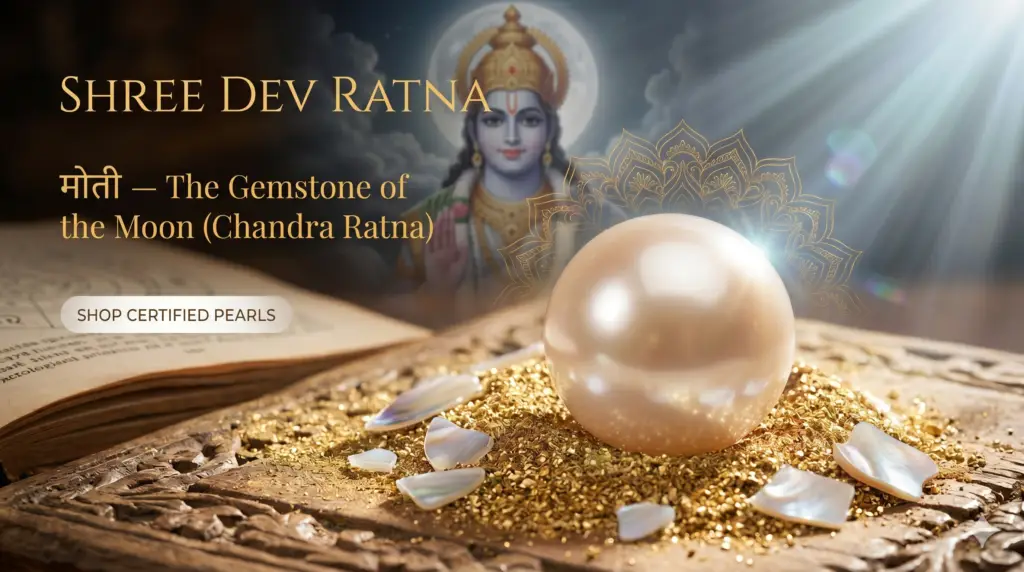
Pearl (Moti Stone)

मोती — The Gemstone of the Moon

Full Product Description

What is a Pearl (Moti)?

Pearl, known as Moti or Mukta in Hindi and Sanskrit, stands apart from every other gemstone in the Navratna — it is not a mineral. It is an organic gem created by living mollusks. A pearl forms when an irritant (a grain of sand or a parasite) enters a mollusk, and the creature secretes layer upon layer of nacre (calcium carbonate + conchiolin) around it over months or years. The result is one of nature’s most luminous creations.

In Vedic Jyotish (astrology), Pearl is the Navratna stone of the Moon (Chandra) — the planet of the mind, emotions, mother, intuition, and the subconscious. The Moon governs the tides of the ocean and the tides of human emotion alike. Wearing a natural, high-quality pearl is believed to channel the Moon’s gentle, nurturing energy to stabilize the mind and cultivate inner peace.


The Legend & History of Pearl

Pearls have captivated human civilization for over 4,000 years — making them one of the oldest known gemstones in the world. Ancient Indian texts describe the pearl as a divine gift from the ocean, formed from dewdrops that fell into the sea during the auspicious Swati Nakshatra. Hindu mythology holds that Lord Krishna first gifted a pearl to his daughter Pandaia on her wedding day, establishing the tradition of pearl gifts.

In ancient Rome, pearls were the ultimate symbol of wealth and status — Julius Caesar passed a law restricting pearl jewellery to the ruling classes. Cleopatra famously dissolved a pearl in vinegar and drank it to prove her wealth to Mark Antony. The Mughal Emperor Shah Jahan, builder of the Taj Mahal, was rarely seen without his pearl necklaces. Persian Gulf Basra pearls, considered the finest in the world, were traded along the ancient Silk Route.

In Ayurveda, Pearl powder (Mukta Pishti) is used in traditional medicine to treat anxiety, insomnia, and respiratory disorders — a testament to the Pearl’s long-standing association with mental and physical calm.


Types of Pearl by Origin & Formation

  •       Natural Basra Pearl (Persian Gulf): The rarest and most astrologically prized pearl in the world. Formed without human intervention in the Persian Gulf off Basra, Iraq. Now extremely scarce due to overfishing and oil exploration. Identified only by X-ray or lab testing. Commands extraordinary premiums.
  •       South Sea Pearl: Grown in Pinctada maxima oysters in the warm waters of Australia, Indonesia, and the Philippines. The largest cultured pearl available — typically 10–18mm. Available in white, silver, and gold hues. Second most prized for astrology after Basra.
  •       Tahitian Pearl (Black Pearl): Produced by the black-lipped oyster (Pinctada margaritifera) in French Polynesia. Naturally dark — black, grey, green, or peacock. Exotic and valuable; used for Venus / Saturn effects in some traditions.
  •       Freshwater Pearl: Grown in freshwater mussels, primarily in China. Most affordable and widely available. Comes in a wide variety of shapes and colors. Good for daily use and lighter astrological purposes.
  •       Keshi Pearl: A by-product of cultured pearl farming — forms without a nucleus. All-nacre composition gives exceptional luster. Irregular baroque shapes; highly valued for their luster-to-price ratio.
  •       Japanese Akoya Pearl: Grown in Pinctada fucata oysters. Classic round white pearl with sharp, mirror-like luster. Typically 6–9mm. The benchmark for pearl luster and roundness.


मोती (Pearl / Moti) क्या है?

मोती, जिसे हिंदी और संस्कृत में मोती या मुक्ता कहा जाता है, नवरत्नों में एकमात्र ऐसा रत्न है जो खनिज (Mineral) नहीं बल्कि एक जैविक (Organic) रत्न है। यह जीवित मोलस्क (Mollusk) जैसे सीप (Oyster) द्वारा बनाया जाता है। जब कोई बाहरी कण, रेत का दाना या परजीवी सीप के अंदर प्रवेश करता है, तो वह अपने बचाव के लिए उस कण के चारों ओर नेकर (Nacre) की परतें चढ़ाता है। महीनों या वर्षों में यही परतें एक सुंदर और चमकदार मोती का निर्माण करती हैं।

वैदिक ज्योतिष में मोती चंद्रमा (चन्द्र) का रत्न माना जाता है। चंद्रमा मन, भावनाओं, माता, अंतर्ज्ञान और अवचेतन मन का कारक ग्रह है। माना जाता है कि प्राकृतिक और उच्च गुणवत्ता वाला मोती धारण करने से चंद्रमा की शांत, सौम्य और पोषण देने वाली ऊर्जा प्राप्त होती है, जिससे मानसिक शांति, भावनात्मक संतुलन और आंतरिक स्थिरता बढ़ती है।


मोती का इतिहास और पौराणिक महत्व

मोती लगभग 4,000 वर्षों से अधिक समय से मानव सभ्यता को आकर्षित करता आया है, जिससे यह दुनिया के सबसे प्राचीन रत्नों में से एक बन जाता है।

प्राचीन भारतीय ग्रंथों में मोती को समुद्र का दिव्य उपहार बताया गया है। मान्यता है कि स्वाती नक्षत्र के दौरान समुद्र में गिरने वाली ओस की बूंदों से मोती का जन्म होता है। हिंदू पौराणिक कथाओं के अनुसार, भगवान श्रीकृष्ण ने अपनी पुत्री पाण्डैया के विवाह पर उसे मोती भेंट किया था, जिससे विवाह में मोती उपहार देने की परंपरा शुरू हुई।

प्राचीन रोम में मोती धन और प्रतिष्ठा का सर्वोच्च प्रतीक था। जूलियस सीज़र ने ऐसा कानून बनाया था कि केवल शासक वर्ग ही मोती के आभूषण पहन सकता था। मिस्र की रानी क्लियोपेट्रा ने अपनी अपार संपत्ति दिखाने के लिए एक बहुमूल्य मोती को सिरके में घोलकर पी लिया था। मुगल सम्राट शाहजहाँ, जिन्होंने ताजमहल का निर्माण कराया, अक्सर मोतियों की मालाएं पहने दिखाई देते थे।

फारस की खाड़ी (Persian Gulf) के बसरा मोती (Basra Pearls) को दुनिया के सर्वश्रेष्ठ मोतियों में गिना जाता था और इनका व्यापार प्राचीन सिल्क रूट के माध्यम से किया जाता था।

आयुर्वेद में मुक्ता पिष्टी (Pearl Powder) का उपयोग चिंता, अनिद्रा और श्वसन संबंधी समस्याओं के उपचार में किया जाता है, जो मानसिक और शारीरिक शांति से इसके गहरे संबंध को दर्शाता है।


उत्पत्ति और निर्माण के आधार पर मोतियों के प्रकार

1. प्राकृतिक बसरा मोती (Natural Basra Pearl)

  • दुनिया का सबसे दुर्लभ और ज्योतिषीय दृष्टि से सबसे मूल्यवान मोती।
  • इराक के बसरा क्षेत्र के पास फारस की खाड़ी में प्राकृतिक रूप से बनता है।
  • मानव हस्तक्षेप के बिना निर्मित।
  • अत्यधिक दुर्लभ होने के कारण इसकी कीमत बहुत अधिक होती है।
  • केवल एक्स-रे या प्रयोगशाला परीक्षण से इसकी पहचान की जा सकती है।

2. साउथ सी पर्ल (South Sea Pearl)

  • ऑस्ट्रेलिया, इंडोनेशिया और फिलीपींस के गर्म समुद्री जल में पाए जाने वाले Pinctada maxima सीपों में विकसित होता है।
  • आकार में सबसे बड़ा मोती (आमतौर पर 10–18 मिमी)।
  • सफेद, चांदी और सुनहरे रंगों में उपलब्ध।
  • ज्योतिष में बसरा मोती के बाद सबसे अधिक प्रतिष्ठित।

3. ताहितियन पर्ल (Tahitian Pearl / Black Pearl)

  • फ्रेंच पोलिनेशिया में पाए जाने वाले Black-Lipped Oyster से प्राप्त।
  • प्राकृतिक रूप से काला, धूसर, हरा या मोर-पंखी रंग का होता है।
  • अत्यंत आकर्षक और मूल्यवान।
  • कुछ परंपराओं में शुक्र और शनि के प्रभावों के लिए उपयोग किया जाता है।

4. फ्रेशवॉटर पर्ल (Freshwater Pearl)

  • मुख्य रूप से चीन में मीठे पानी की सीपों में विकसित किया जाता है।
  • सबसे किफायती और व्यापक रूप से उपलब्ध मोती।
  • विभिन्न आकारों और रंगों में मिलता है।
  • दैनिक उपयोग और हल्के ज्योतिषीय उद्देश्यों के लिए उपयुक्त।

5. केशी पर्ल (Keshi Pearl)

  • कल्चर्ड पर्ल फार्मिंग का एक उप-उत्पाद।
  • इसमें कोई केंद्रक (Nucleus) नहीं होता।
  • पूरी तरह नेकर से बना होने के कारण इसकी चमक असाधारण होती है।
  • अनियमित (Baroque) आकार में पाया जाता है।
  • कीमत की तुलना में उत्कृष्ट चमक प्रदान करता है।

6. जापानी अकोया पर्ल (Japanese Akoya Pearl)

  • Pinctada fucata सीप में विकसित किया जाता है।
  • पारंपरिक गोल सफेद मोती।
  • अत्यधिक चमकदार और लगभग दर्पण जैसी सतह।
  • सामान्यतः 6–9 मिमी आकार में उपलब्ध।
  • चमक और गोलाई के लिए विश्वभर में मानक माना जाता है।


Technical Specifications


Gemstone Name

Pearl (Moti / Mukta)

Type

Organic gemstone — not a mineral

Composition

Calcium carbonate (aragonite) + conchiolin protein

Chemical Formula

CaCO₃ (aragonite polymorph)

Crystal System

Orthorhombic (aragonite layers)

Hardness (Mohs)

2.5 – 4.5 (relatively soft — handle with care)

Refractive Index

1.52 – 1.66

Specific Gravity

2.60 – 2.85

Luster

Pearlescent (orient) — unique to pearls; no other gem replicates it

Transparency

Opaque with surface luster

Color Range

White, cream, pink (rosé), golden, silver, black

Nacre Thickness

Natural: entire body is nacre. Cultured: thin nacre layer over nucleus

Common Treatments

Bleaching (standard), dyeing, irradiation (for black/dark colors)

Best Origins

Basra (Persian Gulf), South Sea (Australia/Indonesia), Japan (Akoya)

Ruling Planet

Moon (Chandra)

Chakra

Swadhisthana (Sacral) / Sahasrara (Crown)

Zodiac (Rashi)

Cancer (Karka) — primary; also Pisces, Scorpio

Recommended Weight

Minimum 5 Ratti (4.5 ct) for astrological use

Setting Metal

Silver (primary); also Panchdhatu

Wearing Finger

Little finger (Kanishka), right hand

Auspicious Day

Monday, during Shukla Paksha (waxing moon), morning

Mantra

Om Shraam Shreem Shraum Sah Chandraaya Namah (108 times)


तकनीकी विनिर्देश (Technical Specifications) – मोती (Pearl / Moti / Mukta)

विवरणजानकारी
रत्न का नाममोती (Pearl / Moti / Mukta)
प्रकारजैविक (Organic) रत्न – खनिज नहीं
संरचनाकैल्शियम कार्बोनेट (एरागोनाइट) + कॉन्कियोलिन प्रोटीन
रासायनिक सूत्रCaCO₃ (एरागोनाइट बहुरूप)
क्रिस्टल प्रणालीऑर्थोरोम्बिक (एरागोनाइट की परतें)
कठोरता (Mohs Scale)2.5 – 4.5 (काफी नरम, सावधानी से संभालें)
अपवर्तनांक (Refractive Index)1.52 – 1.66
विशिष्ट गुरुत्व (Specific Gravity)2.60 – 2.85
चमक (Luster)मोती जैसी अद्वितीय चमक (Pearlescent/Orient), जिसकी नकल कोई अन्य रत्न नहीं कर सकता
पारदर्शिता (Transparency)अपारदर्शी (Opaque) लेकिन सतह पर आकर्षक चमक
रंगों की श्रेणीसफेद, क्रीम, गुलाबी (रोज़े), सुनहरा, चांदी जैसा, काला
नेकर (Nacre) की मोटाईप्राकृतिक मोती में पूरा मोती नेकर का होता है; कल्चर्ड मोती में केंद्रक (Nucleus) के ऊपर नेकर की परत होती है
सामान्य उपचार (Treatments)ब्लीचिंग (सामान्य), रंगाई (Dyeing), विकिरण उपचार (Irradiation) – विशेषकर काले/गहरे रंग के लिए
सर्वश्रेष्ठ उत्पत्ति स्थलबसरा (फारस की खाड़ी), साउथ सी (ऑस्ट्रेलिया/इंडोनेशिया), जापान (अकोया)
शासक ग्रहचंद्रमा (Chandra)
चक्रस्वाधिष्ठान चक्र (Sacral) / सहस्रार चक्र (Crown)
राशिकर्क (मुख्य), साथ ही मीन और वृश्चिक
अनुशंसित वजनज्योतिषीय उपयोग हेतु न्यूनतम 5 रत्ती (लगभग 4.5 कैरेट)
धारण करने की धातुचांदी (मुख्य), पंचधातु भी उपयुक्त
धारण करने की उंगलीकनिष्ठा (छोटी उंगली), दाहिने हाथ में
शुभ दिनसोमवार, शुक्ल पक्ष में, प्रातःकाल
मंत्रॐ श्रां श्रीं श्रौं सः चन्द्राय नमः (108 बार जप करें)

Astrological & Health Benefits


🧠 Mental Peace

Calms overthinking & anxiety

💧 Emotional Balance

Stabilizes mood swings

🌙 Moon’s Blessings

Amplifies lunar energy

😴 Better Sleep

Promotes deep, restful sleep

💞 Relationships

Nurtures bonds with mother

🤰 Fertility

Supports reproductive health

💼 Creativity

Enhances artistic expression

🌊 Intuition

Sharpens inner wisdom

💊 Digestion

Soothes gut-related issues

👁️  Memory

Strengthens concentration

😌 Reduces Anger

Cools temperament & irritability

✨ Skin Glow

Traditionally linked to skin health


Who Should Wear Pearl (Moti)?

  •       Cancer ascendant (Karka Lagna) — Pearl is the primary gemstone for Moon
  •       Individuals with a weak, afflicted, or debilitated Moon in their horoscope
  •       Those undergoing Moon Mahadasha (10-year period) or Antardasha
  •       People who suffer from anxiety, depression, insomnia, or emotional instability
  •       Mothers, caregivers, nurses, and those in nurturing professions
  •       Artists, poets, musicians, and creative professionals
  •       Those with poor relationship with their mother or maternal figures
  •       Individuals seeking to improve memory, concentration, and academic performance

ज्योतिषीय एवं स्वास्थ्य लाभ (Astrological & Health Benefits)

🧠 मानसिक शांति (Mental Peace)
अत्यधिक सोच और चिंता को शांत करने में सहायक।

💧 भावनात्मक संतुलन (Emotional Balance)
मूड स्विंग्स और भावनात्मक अस्थिरता को नियंत्रित करने में मदद करता है।

🌙 चंद्रमा का आशीर्वाद (Moon’s Blessings)
चंद्रमा की सकारात्मक और शुभ ऊर्जा को बढ़ाता है।

😴 बेहतर नींद (Better Sleep)
गहरी और आरामदायक नींद को प्रोत्साहित करता है।

💞 संबंधों में सुधार (Relationships)
माता और परिवार के साथ प्रेमपूर्ण संबंधों को मजबूत बनाता है।

🤰 प्रजनन क्षमता (Fertility)
प्रजनन स्वास्थ्य को समर्थन देने वाला माना जाता है।

💼 रचनात्मकता (Creativity)
कलात्मक अभिव्यक्ति और सृजनात्मक सोच को बढ़ावा देता है।

🌊 अंतर्ज्ञान (Intuition)
आंतरिक ज्ञान और निर्णय क्षमता को तीव्र बनाता है।

💊 पाचन स्वास्थ्य (Digestion)
पाचन तंत्र से जुड़ी समस्याओं को शांत करने में सहायक माना जाता है।

👁️ स्मरण शक्ति (Memory)
एकाग्रता और याददाश्त को मजबूत करने में मदद करता है।

😌 क्रोध में कमी (Reduces Anger)
स्वभाव को शांत करता है तथा चिड़चिड़ापन कम करने में सहायक होता है।

त्वचा की चमक (Skin Glow)
पारंपरिक मान्यताओं के अनुसार त्वचा के स्वास्थ्य और प्राकृतिक चमक से जुड़ा माना जाता है।


मोती (Pearl / Moti) किसे धारण करना चाहिए?

कर्क लग्न (Cancer Ascendant / Karka Lagna) वाले जातकों के लिए मोती प्रमुख रत्न माना जाता है क्योंकि चंद्रमा उनका स्वामी ग्रह होता है।

• जिनकी कुंडली में चंद्रमा कमजोर, पीड़ित या नीच राशि में स्थित हो।

• जो लोग चंद्र महादशा (10 वर्ष) या चंद्र अंतरदशा से गुजर रहे हों।

• जो व्यक्ति चिंता, अवसाद, अनिद्रा या भावनात्मक अस्थिरता का अनुभव करते हों।

माता, देखभाल करने वाले (Caregivers), नर्स एवं सेवा-भाव से जुड़े पेशेवरों के लिए।

कलाकार, कवि, संगीतकार और रचनात्मक क्षेत्र में कार्यरत लोगों के लिए।

• जिनका अपनी माता या मातृ समान व्यक्तियों के साथ संबंध कमजोर हो।

• जो अपनी याददाश्त, एकाग्रता और शैक्षणिक प्रदर्शन में सुधार करना चाहते हों


How to Choose the Best Pearl — Quality Guide

The 5 Key Quality Factors for Pearl

  1. Luster — The Most Critical Factor

Luster is the reflection of light from a pearl’s surface and from within its nacre layers. High-luster pearls show sharp, mirror-like reflections. Dull, chalky, or hazy pearls have poor luster and weak astrological value. Always check luster under natural daylight or a single light source.

  •       Excellent luster: Sharp, bright reflection; you can almost see your reflection on the pearl
  •       Good luster: Bright but slightly blurred reflection
  •       Poor luster: Dull, chalky, milky — avoid for astrology
  1. Surface Quality

The nacre surface of a pearl should be as smooth and blemish-free as possible. Some minor imperfections are natural and expected in fine pearls, but heavy pitting, cracks, or flat spots reduce both beauty and potency.

  •       Look for: Clean, smooth nacre with minimal blemishes
  •       Avoid: Pitted, cracked, or peeling surfaces
  1. Shape

Round pearls are the rarest and most valuable. However, for astrological use, a smooth, round pearl is strongly preferred — it represents the full circle of the Moon and is believed to transmit lunar energies most effectively.

  •       Round: Ideal for both jewellery and astrology
  •       Near-round: Acceptable; slightly flattened on one axis
  •       Baroque / Drop: Beautiful but less preferred for astrological rings
  1. Nacre Thickness

For cultured pearls, nacre thickness is crucial. Thick nacre means better luster, longer durability, and stronger astrological effect. Thin-nacre pearls (common in low-quality Chinese freshwater or hastily cultured Akoya) peel quickly and lose their luster.

  •       Natural pearls: Entire body is nacre — the highest quality
  •       South Sea / Tahitian: Typically 2–4mm nacre — excellent
  •       Quality Akoya: Minimum 0.4mm nacre recommended
  1. Size (Weight in Ratti / Carats)

For astrological use, the minimum recommended weight is 5 Ratti (approximately 4.5 carats). Larger, heavier pearls are generally more potent. Pearl size is typically described in millimetres (mm diameter) for round pearls.

Pearl Size

Approximate Ratti Weight

6–7 mm

~4–5 Ratti

7–8 mm

~5–7 Ratti

8–9 mm

~7–9 Ratti

9–10 mm

~9–12 Ratti

10+ mm

12+ Ratti (South Sea range)


Natural vs. Cultured Pearl — What Should You Buy for Astrology?

Natural Pearl: Entire body is pure nacre. No nucleus. Formed without human intervention. Considered far more potent astrologically. Extremely rare — most ‘natural’ pearls on the market are actually cultured. Requires X-ray or lab certification to confirm.

Cultured Pearl: Nucleus of shell bead implanted in a mollusk; thin nacre deposited over months to years. Most pearls available today — including South Sea, Akoya, Tahitian, and freshwater — are cultured. High-quality cultured pearls are effective for astrology when nacre thickness and luster are excellent.


सर्वोत्तम मोती कैसे चुनें — गुणवत्ता मार्गदर्शिका

मोती की गुणवत्ता के 5 मुख्य कारक

1. चमक (Luster) — सबसे महत्वपूर्ण कारक

चमक वह प्रकाश है जो मोती की सतह और उसकी नेकर (Nacre) की परतों के भीतर से परावर्तित होता है। उच्च चमक वाले मोती में दर्पण जैसी स्पष्ट चमक दिखाई देती है। फीके, धुंधले या चॉक जैसे मोती की ज्योतिषीय प्रभावशीलता भी कम मानी जाती है।

हमेशा प्राकृतिक दिन के प्रकाश या एकल प्रकाश स्रोत में मोती की चमक की जांच करें।

  • उत्कृष्ट चमक (Excellent Luster): तेज, चमकदार प्रतिबिंब; आप लगभग अपना चेहरा देख सकते हैं।
  • अच्छी चमक (Good Luster): चमकदार लेकिन थोड़ा धुंधला प्रतिबिंब।
  • कमजोर चमक (Poor Luster): फीकी, चॉक जैसी या दूधिया; ज्योतिषीय उपयोग के लिए ऐसे मोती से बचें।

2. सतह की गुणवत्ता (Surface Quality)

मोती की नेकर सतह जितनी अधिक चिकनी और दाग-धब्बों से मुक्त होगी, उतनी ही बेहतर मानी जाती है। हल्के प्राकृतिक निशान सामान्य हैं, लेकिन अधिक गड्ढे, दरारें या चपटे हिस्से इसकी सुंदरता और प्रभाव को कम कर देते हैं।

देखें:

  • साफ, चिकनी सतह
  • न्यूनतम दाग-धब्बे

बचें:

  • गड्ढेदार (Pitted) सतह
  • दरारें (Cracks)
  • छिलती हुई परतें

3. आकार (Shape)

गोल (Round) मोती सबसे दुर्लभ और मूल्यवान होते हैं। ज्योतिषीय दृष्टि से भी गोल और चिकने मोती को सबसे श्रेष्ठ माना जाता है क्योंकि यह चंद्रमा के पूर्ण आकार का प्रतीक होता है।

  • गोल (Round): आभूषण और ज्योतिष दोनों के लिए सर्वोत्तम।
  • लगभग गोल (Near-Round): स्वीकार्य; एक दिशा में थोड़ा चपटा।
  • बारोक / ड्रॉप (Baroque / Drop): सुंदर होते हैं, लेकिन ज्योतिषीय अंगूठियों के लिए कम पसंद किए जाते हैं।

4. नेकर की मोटाई (Nacre Thickness)

कल्चर्ड (Cultured) मोतियों में नेकर की मोटाई अत्यंत महत्वपूर्ण होती है। मोटी नेकर बेहतर चमक, अधिक टिकाऊपन और अधिक ज्योतिषीय प्रभाव प्रदान करती है।

पतली नेकर वाले मोती जल्दी अपनी चमक खो देते हैं और उनकी सतह छिल सकती है।

  • प्राकृतिक मोती: पूरा मोती नेकर से बना होता है — सर्वोच्च गुणवत्ता।
  • साउथ सी / ताहितियन मोती: सामान्यतः 2–4 मिमी नेकर — उत्कृष्ट।
  • उच्च गुणवत्ता वाले अकोया मोती: कम से कम 0.4 मिमी नेकर अनुशंसित।

5. आकार और वजन (रत्ती / कैरेट)

ज्योतिषीय उपयोग के लिए कम से कम 5 रत्ती (लगभग 4.5 कैरेट) का मोती पहनने की सलाह दी जाती है। बड़े और भारी मोती अधिक प्रभावशाली माने जाते हैं।

मोती का आकार सामान्यतः मिलीमीटर (mm) में मापा जाता है।

मोती का आकारअनुमानित वजन (रत्ती)
6–7 मिमीलगभग 4–5 रत्ती
7–8 मिमीलगभग 5–7 रत्ती
8–9 मिमीलगभग 7–9 रत्ती
9–10 मिमीलगभग 9–12 रत्ती
10+ मिमी12+ रत्ती (साउथ सी श्रेणी)

प्राकृतिक बनाम कल्चर्ड मोती — ज्योतिष के लिए कौन सा खरीदें?

प्राकृतिक मोती (Natural Pearl)

  • पूरा मोती शुद्ध नेकर से बना होता है।
  • इसमें कोई केंद्रक (Nucleus) नहीं होता।
  • बिना किसी मानवीय हस्तक्षेप के प्राकृतिक रूप से बनता है।
  • ज्योतिषीय दृष्टि से सबसे अधिक प्रभावशाली माना जाता है।
  • अत्यंत दुर्लभ होता है।
  • बाजार में “प्राकृतिक” बताए जाने वाले अधिकांश मोती वास्तव में कल्चर्ड होते हैं।
  • इसकी पुष्टि केवल एक्स-रे परीक्षण या प्रमाणित जेमोलॉजिकल लैब रिपोर्ट द्वारा की जा सकती है।

कल्चर्ड मोती (Cultured Pearl)

  • इसमें सीप के अंदर एक शेल बीड (केंद्रक) प्रत्यारोपित किया जाता है।
  • उसके ऊपर महीनों या वर्षों तक नेकर की परतें बनती हैं।
  • आज बाजार में उपलब्ध अधिकांश मोती इसी श्रेणी के होते हैं, जैसे:
    • साउथ सी पर्ल
    • अकोया पर्ल
    • ताहितियन पर्ल
    • फ्रेशवॉटर पर्ल
  • यदि नेकर की मोटाई और चमक उत्कृष्ट हो, तो उच्च गुणवत्ता वाले कल्चर्ड मोती भी ज्योतिषीय उपयोग के लिए प्रभावी माने जाते हैं।

निष्कर्ष

ज्योतिषीय दृष्टि से प्राकृतिक मोती सर्वोत्तम माना जाता है, लेकिन इसकी दुर्लभता और ऊँची कीमत के कारण अधिकांश लोग उच्च गुणवत्ता वाले कल्चर्ड मोती का चयन करते हैं। मोती खरीदते समय चमक (Luster), सतह की गुणवत्ता, आकार, नेकर की मोटाई और प्रमाणित लैब रिपोर्ट पर विशेष ध्यान दें।

 How to Wear Pearl — Complete Ritual Guide

Step-by-Step Wearing Ritual

  •       Day & Time: Monday morning, 1–2 hours after sunrise, during Shukla Paksha (waxing moon fortnight). Avoid wearing on Amavasya (new moon day).
  •       Purification: Immerse the pearl ring in raw cow’s milk for 20–30 minutes. Then rinse gently with clean water. Pat dry with a soft, clean cotton cloth. Never use soap or chemicals directly on pearls.
  •       Energization: Place the ring on a white cloth near a silver or white bowl. Light a white/silver candle or ghee lamp. Offer white flowers (jasmine or white rose) to the Moon.
  •       Mantra: ‘Om Shraam Shreem Shraum Sah Chandraaya Namah’ — chant 108 times facing the North or East direction. Ideally begin before or at sunrise on Monday.
  •       Wearing: Wear on the little finger (Kanishka) of the right hand. Some traditions recommend the index finger — follow your astrologer’s guidance.
  •       Maintenance: Clean monthly by soaking briefly in clean water (no chemicals). Do not expose to perfumes, hairsprays, or acids. Re-energize every 6 months. Replace the stone if it cracks, turns dull, or loses its luster — this often signals it has absorbed negative energies.


Metal, Finger & Setting

Preferred Metal

Pure Silver (92.5% sterling)

Alternative Metal

Panchdhatu (five-metal alloy)

Finger

Little finger (Kanishka), right hand

Setting Style

Open back / Bezel set — stone should touch skin

Minimum Carat

5 Ratti (4.5 ct) for astrological results

Ideal Weight

7–11 Ratti (6.3–9.9 ct) for full effect

Pearl Shape

Round preferred; near-round acceptable


मोती कैसे धारण करें — संपूर्ण विधि (Complete Ritual Guide)

चरण-दर-चरण मोती धारण करने की विधि

1. शुभ दिन और समय

  • सोमवार की सुबह मोती धारण करें।
  • सूर्योदय के 1–2 घंटे बाद का समय सर्वोत्तम माना जाता है।
  • शुक्ल पक्ष (चंद्रमा के बढ़ते चरण) में धारण करना शुभ होता है।
  • अमावस्या के दिन मोती धारण करने से बचें।

2. शुद्धिकरण (Purification)

  • मोती की अंगूठी को कच्चे गाय के दूध में 20–30 मिनट तक रखें।
  • इसके बाद साफ पानी से धीरे-धीरे धो लें।
  • मुलायम और साफ सूती कपड़े से सुखाएं।
  • मोती पर कभी भी सीधे साबुन, डिटर्जेंट या रासायनिक पदार्थों का उपयोग न करें।

3. ऊर्जाकरण (Energization)

  • अंगूठी को सफेद कपड़े पर रखें।
  • पास में चांदी या सफेद धातु का पात्र रखें।
  • सफेद/चांदी रंग की मोमबत्ती या घी का दीपक जलाएं।
  • चंद्रमा को सफेद फूल (जैसे चमेली या सफेद गुलाब) अर्पित करें।

4. मंत्र जाप

निम्न मंत्र का 108 बार जाप करें:

ॐ श्रां श्रीं श्रौं सः चन्द्राय नमः

  • जाप करते समय उत्तर या पूर्व दिशा की ओर मुख रखें।
  • सर्वोत्तम परिणाम के लिए सोमवार को सूर्योदय के समय या उससे पहले जाप प्रारंभ करें।

5. धारण करने की विधि

  • मोती की अंगूठी को दाहिने हाथ की कनिष्ठा (छोटी उंगली) में पहनें।
  • कुछ ज्योतिषीय परंपराओं में तर्जनी (Index Finger) की भी सलाह दी जाती है, इसलिए अपने ज्योतिषी के निर्देशों का पालन करें।

6. देखभाल (Maintenance)

  • प्रत्येक महीने मोती को कुछ समय के लिए साफ पानी में भिगोकर साफ करें।
  • किसी भी प्रकार के रसायन, परफ्यूम, हेयर स्प्रे या अम्लीय पदार्थों से दूर रखें।
  • हर 6 महीने में मोती का पुनः ऊर्जाकरण करें।
  • यदि मोती में दरार आ जाए, वह फीका पड़ जाए या उसकी चमक समाप्त हो जाए, तो उसे बदलने की सलाह दी जाती है।

धातु, उंगली और सेटिंग

विवरणअनुशंसा
उपयुक्त धातुशुद्ध चांदी (92.5% स्टर्लिंग सिल्वर)
वैकल्पिक धातुपंचधातु
धारण करने की उंगलीदाहिने हाथ की कनिष्ठा (छोटी उंगली)
सेटिंग शैलीओपन बैक / बेज़ल सेटिंग — ताकि मोती त्वचा को स्पर्श करे
न्यूनतम वजन5 रत्ती (लगभग 4.5 कैरेट)
आदर्श वजन7–11 रत्ती (लगभग 6.3–9.9 कैरेट)
मोती का आकारपूर्ण गोल (Round) सर्वोत्तम; लगभग गोल (Near-Round) भी स्वीकार्य

विशेष नोट

ज्योतिषीय मान्यताओं के अनुसार मोती को चंद्रमा का रत्न माना जाता है। इसे धारण करने से पहले किसी योग्य ज्योतिषी से अपनी कुंडली की जांच करवाना उचित रहता है, ताकि यह सुनिश्चित हो सके कि मोती आपके लिए लाभकारी है।


Certifications & Authenticity

Pearls are among the most commonly faked and misrepresented gemstones in the market. Lab certification is essential to confirm natural vs. cultured status, nacre thickness, and origin.


GIA (Gemological Inst.)

Issues natural vs. cultured, freshwater vs. saltwater, and origin reports

IGI (Int’l Gem Institute)

Widely accepted in India; provides pearl identification and nacre thickness reports

SSEF (Swiss Gem Lab)

Swiss lab specializing in natural pearl identification — essential for Basra pearl verification

Gübelin Gem Lab

Swiss prestige lab; provides detailed origin and nacre structure reports

GTL Jaipur

GJEPC-affiliated; trusted domestic certification for the Indian market

प्रमाणपत्र एवं प्रामाणिकता (Certifications & Authenticity)

मोती उन रत्नों में से एक है जिनकी बाजार में सबसे अधिक नकली या गलत पहचान के साथ बिक्री की जाती है। इसलिए मोती खरीदते समय प्रमाणित लैब रिपोर्ट (Lab Certification) अत्यंत महत्वपूर्ण होती है। यह प्रमाणपत्र यह पुष्टि करता है कि मोती प्राकृतिक (Natural) है या कल्चर्ड (Cultured), उसकी नेकर (Nacre) की मोटाई कितनी है और उसका उत्पत्ति स्थान (Origin) क्या है।


प्रमुख प्रमाणन संस्थान

1. GIA (Gemological Institute of America)

  • विश्व की सबसे प्रतिष्ठित जेमोलॉजिकल संस्थाओं में से एक।
  • प्राकृतिक और कल्चर्ड मोती की पहचान करता है।
  • फ्रेशवॉटर (Freshwater) और साल्टवॉटर (Saltwater) मोती का अंतर बताता है।
  • उत्पत्ति (Origin) संबंधी रिपोर्ट भी प्रदान करता है।

2. IGI (International Gemological Institute)

  • भारत सहित विश्वभर में व्यापक रूप से मान्य।
  • मोती की पहचान और गुणवत्ता का प्रमाणपत्र जारी करता है।
  • नेकर (Nacre) की मोटाई संबंधी रिपोर्ट भी उपलब्ध कराता है।
  • भारतीय ग्राहकों के लिए विश्वसनीय विकल्प।

3. SSEF (Swiss Gemmological Institute)

  • स्विट्ज़रलैंड की प्रतिष्ठित जेम लैब।
  • प्राकृतिक मोती की पहचान में विशेषज्ञ।
  • विशेष रूप से बसरा मोती (Basra Pearl) की पुष्टि के लिए अत्यंत महत्वपूर्ण।
  • अंतरराष्ट्रीय नीलामियों और उच्च-मूल्य वाले मोतियों में व्यापक रूप से स्वीकार्य।

4. Gübelin Gem Lab

  • विश्व की सबसे प्रतिष्ठित स्विस जेमोलॉजिकल प्रयोगशालाओं में से एक।
  • मोती की उत्पत्ति और नेकर संरचना पर विस्तृत रिपोर्ट प्रदान करती है।
  • दुर्लभ और उच्च मूल्य वाले मोतियों के लिए अत्यधिक सम्मानित।

5. GTL Jaipur (Gem Testing Laboratory Jaipur)

  • भारत के GJEPC (Gem & Jewellery Export Promotion Council) से संबद्ध।
  • भारतीय बाजार में एक विश्वसनीय प्रमाणन संस्था।
  • मोती और अन्य रत्नों की प्रामाणिकता की जांच के लिए लोकप्रिय।

मोती खरीदते समय ध्यान रखने योग्य बातें

✅ हमेशा लैब-प्रमाणित (Certified) मोती ही खरीदें।
✅ रिपोर्ट में Natural या Cultured की स्पष्ट जानकारी होनी चाहिए।
✅ नेकर की मोटाई (Nacre Thickness) का उल्लेख अवश्य देखें।
✅ महंगे मोती, विशेषकर बसरा मोती, के लिए GIA, SSEF या Gübelin जैसी प्रतिष्ठित लैब की रिपोर्ट को प्राथमिकता दें।
✅ बिना प्रमाणपत्र वाले मोती को “प्राकृतिक” बताने वाले दावों पर भरोसा न करें।

निष्कर्ष

एक प्रमाणित मोती न केवल उसकी वास्तविकता की पुष्टि करता है, बल्कि उसके मूल्य, गुणवत्ता और ज्योतिषीय उपयोगिता के बारे में भी विश्वसनीय जानकारी प्रदान करता है। इसलिए मोती खरीदते समय प्रमाणपत्र को उतना ही महत्व दें जितना स्वयं मोती को।


Frequently Asked Questions

Pearl (Moti or Mukta) is the only organic gemstone among the nine Navratna stones — it is not a mineral or crystal but is created by a living organism (a mollusk). This makes it exceptionally unique. It represents the Moon (Chandra) in Vedic astrology and is associated with the mind, emotions, mother, intuition, and the element of water. Its gentle, cooling energy makes it one of the most universally wearable of all Navratna gems.

Pearl is primarily recommended for Cancer ascendant (Karka Lagna) individuals, as the Moon rules Cancer. It is also beneficial for those with a weak or afflicted Moon, those undergoing Moon Mahadasha or Antardasha, and people suffering from anxiety, depression, mood swings, insomnia, or poor relationship with their mother. It is generally considered a safe, mild stone — but a qualified Vedic astrologer should always be consulted.

Pearl should be worn on the little finger (Kanishka) of the right hand, set in pure silver (92.5%). The setting should be open-backed so the pearl touches the skin. Some astrologers recommend the index finger for specific charts — follow personalized guidance. Wearing pearl in gold is generally not recommended for astrological purposes, as gold is associated with the Sun, which is neutral to the Moon.

 The minimum recommended weight is 5 Ratti (approximately 4.5 carats). For stronger and faster results, 7 to 11 Ratti (6.3 to 9.9 carats) is ideal. The pearl should be natural or high-quality cultured, round in shape, free of major surface blemishes, and have excellent luster. Lab certification confirming nacre type is strongly advis

A natural pearl forms entirely without human intervention — the entire pearl body is pure nacre. A cultured pearl is formed when humans insert a nucleus (shell bead) into a mollusk, and the mollusk then deposits a layer of nacre over it. Natural pearls are far rarer and more valuable, and are considered more potent astrologically. Most pearls available in the market today — including South Sea, Akoya, Tahitian, and freshwater — are cultured. Only X-ray testing or a lab certificate can distinguish between them.

Basra Pearl refers to natural pearls historically harvested from the Persian Gulf near Basra, Iraq. Formed over decades without human intervention in mineral-rich Gulf waters, Basra pearls have a unique luster, creamy-white color, and exceptional nacre quality that cultured pearls cannot replicate. They are considered the gold standard of pearls in Vedic astrology. True Basra pearls require SSEF or GIA certification confirming their natural, saltwater Persian Gulf origin and are among the most expensive gems in the world.

Pearl pairs harmoniously with Ruby (Sun is friendly to Moon), Yellow Sapphire (Jupiter is friendly to Moon), and Red Coral (Mars is neutral to Moon). Pearl should generally NOT be combined with Blue Sapphire (Saturn), Hessonite/Gomed (Rahu), or Cat’s Eye (Ketu) without careful astrological consultation, as these represent planetary energies that can conflict with the Moon’s gentle nature.

The most reliable test is lab certification. At home, you can perform the ‘tooth test’ — gently rub the pearl against your front teeth. A real pearl feels slightly gritty or sandy, while an imitation pearl (glass or plastic) feels smooth. Natural and cultured pearls also feel cool and slightly heavy for their size. However, the tooth test cannot distinguish between natural and cultured pearls — only X-ray analysis or a professional gemological report can confirm this.

Pearl is relatively soft (Mohs 2.5–4.5) and requires special care. Clean with a damp soft cloth — never use ultrasonic cleaners, steamers, or chemical jewelry cleaners. Avoid exposure to perfumes, hairsprays, vinegar, citrus, and chlorine. Store separately from harder gems to prevent scratching. Remove before swimming, bathing, or doing household chores. The natural oils from your skin actually help maintain a pearl’s luster — wearing it regularly is beneficial.

Pearl pricing varies greatly by type and quality. Freshwater pearls: ₹200–₹2,000 per carat. Quality Akoya pearls: ₹1,000–₹10,000 per carat. South Sea pearls: ₹5,000–₹50,000 per carat. Natural Basra pearls: ₹50,000–₹10,00,000+ per carat depending on size and quality. Prices are subject to market fluctuations.

In Ayurvedic tradition, Pearl powder (Mukta Pishti or Mukta Bhasma) has been used for centuries as a cooling tonic for skin health, reducing inflammation, improving complexion, and treating acidity and respiratory issues. While these are traditional beliefs, many users of Pearl (Moti) rings report improvements in skin clarity and overall calmness, consistent with the Moon’s association with water, coolness, and nourishment.

Pearl Care & Maintenance Guide

  •       Cleaning: Wipe gently with a damp soft cloth after wearing. For deeper cleaning, use lukewarm water with no detergent. Never use ultrasonic cleaners, steam cleaners, or chemical jewellery solutions.
  •       Chemicals to Avoid: Perfumes, hairspray, makeup, hand sanitizer, chlorine, vinegar, lemon juice, and household cleaning products. Apply all cosmetics before putting on your pearl ring.
  •       Storage: Store in a soft pouch or fabric-lined jewellery box, away from harder gems. Pearls can be scratched by diamonds, rubies, sapphires, and most other stones.
  •       Humidity: Pearls need a small amount of moisture to maintain their luster. Avoid storing in airtight containers for extended periods. They thrive in conditions similar to human skin.
  •       Re-energization: Re-energize your pearl ring every 6 months using the Monday Shukla Paksha ritual. If the pearl cracks, chips, turns yellowish, or loses its orient — replace it immediately.
  •       Professional Check: Have the setting inspected by a jeweller every 12 months, especially for silver settings which can oxidize over time.


 Pearl Substitutes (Upratna)

If a high-quality natural or South Sea pearl is outside budget, the following substitute (Upratna) gemstones are recommended by some Vedic astrologers for the Moon:


Moonstone (Chandrakanta)

Most popular Pearl substitute; displays adularescence; strongly lunar in energy

White Coral

Organic gem like pearl; cooling energy; used by some traditions for Moon

Rock Crystal (Sphatik)

Clear quartz; cooling and purifying; used as an affordable Moon substitute

White Chalcedony

Pale, smooth white stone; gentle lunar energy; widely available


Scroll to Top